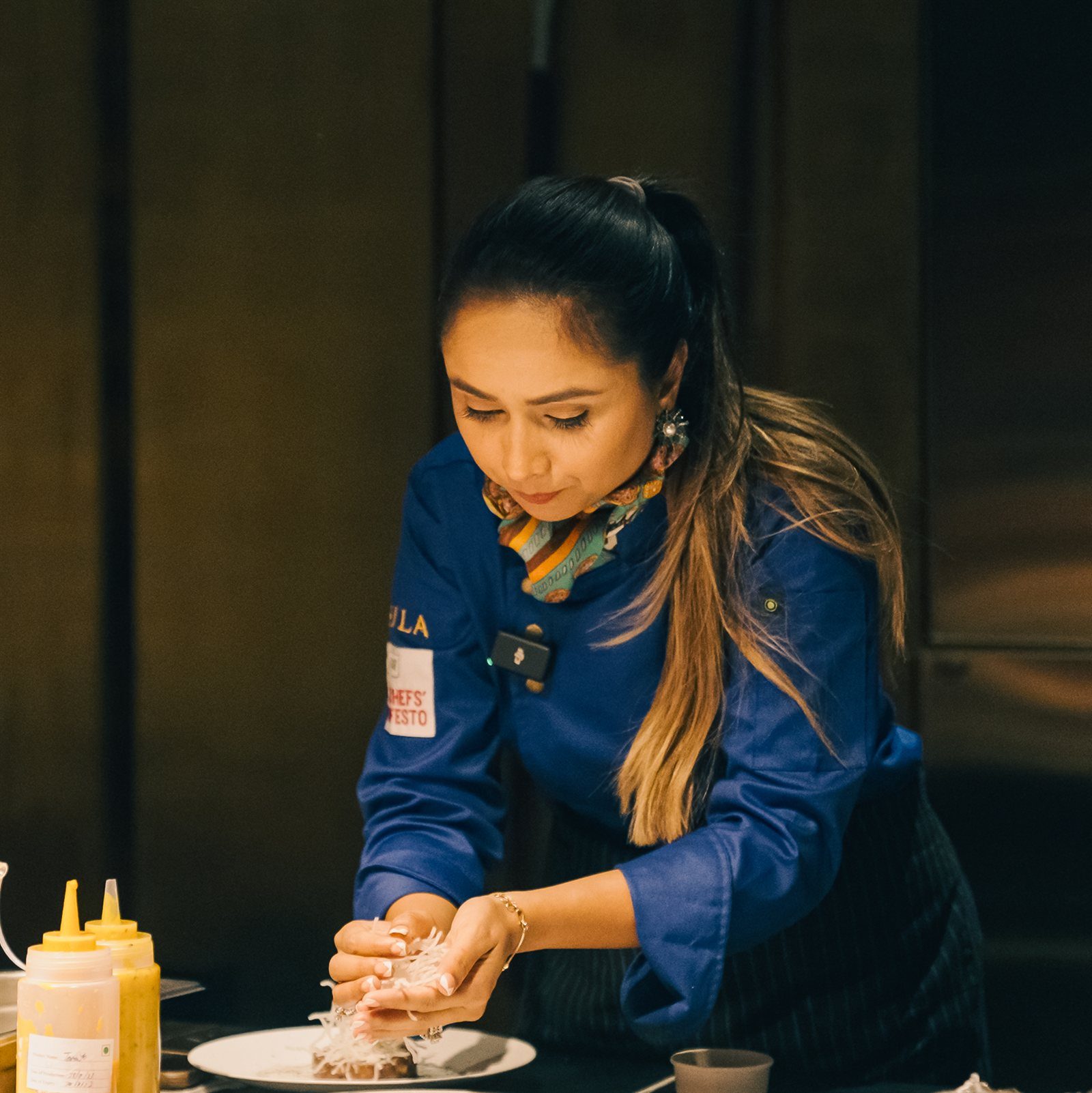
There is a moment during service when the kitchen narrows to a single point. The ticket printer fires. Three tables are waiting. The sauce on station four needs finishing in the next forty seconds or the plate dies. You do not pause to weigh your options. You decide, you move, you live with the result. In a restaurant kitchen, there is no draft mode. Every decision is final the instant your hand leaves the pan. After three years of running Nila in Kongsberg, I have come to believe that this is not a limitation of the kitchen. It is its most honest quality.
People imagine restaurants as glamorous disorder. The reality at Nila is quieter and more deliberate than that. Kongsberg is not Oslo. We do not have a line of fifty covers deep and a brigade of twelve. On a busy Friday, it is four of us, sometimes three. The margin for hesitation is zero, but the pressure is not the dramatic, television kind. It is the steady, accumulating kind — the kind where one slow decision at 18:45 means three late plates at 19:10 and a cascade that follows you for the rest of the night. You learn, quickly, that speed is not the same as rushing. Speed is what happens when you have already made most of your decisions before the moment arrives.
I think about this in the dental chair too. Clinical work and kitchen work share a quality that most other professions do not: irreversibility. When I prepare a tooth, I cannot unprepare it. When I sear a piece of lamb, the Maillard reaction does not offer a second chance. Both disciplines train you to be calm inside the commitment. Not confident — calm. Confidence is a story you tell yourself before. Calm is what you actually need during. The kitchen taught me the difference, and the clinic confirmed it. You do your preparation. You make your call. And then you stay present with the outcome, adjusting in real time rather than retreating into regret.
Running Nila has changed how I trust my own judgment in ways I did not expect. In the early months, I second-guessed everything — the menu, the suppliers, the music, the temperature of the dining room. I wanted external validation for every choice. Gradually, the kitchen burned that out of me. Not because I became arrogant, but because the pace simply does not allow for polling. You taste the sauce. You know. You plate it. The feedback loop is immediate and honest: the plate comes back empty, or it does not. There is no six-month performance review. There is tonight, and then there is tomorrow night, and each one teaches you something if you are willing to be taught.
The lessons have started to follow me home. I notice it in small ways — how I make decisions about the business, about collaborations, about what to say yes to. I am less interested in being right and more interested in being clear. A clear decision made quickly, even if imperfect, almost always outperforms a perfect decision made too late. The kitchen does not reward perfectionism. It rewards presence, preparation, and the willingness to commit. I suspect most of life works the same way, but the kitchen is one of the few places that makes the principle impossible to ignore.
There is something else the line teaches, and it is harder to articulate. It is a particular kind of trust — not in yourself alone, but in the process, in your team, in the hours of preparation that precede the moment of execution. When service starts, you are not improvising. You are performing something you have rehearsed a hundred times in slightly different conditions. The decisions feel fast, but they are built on a foundation of slow, careful work done when no one is watching. Mise en place is not just a kitchen term. It is a philosophy of readiness. And readiness, I have found, is the closest thing to freedom there is.